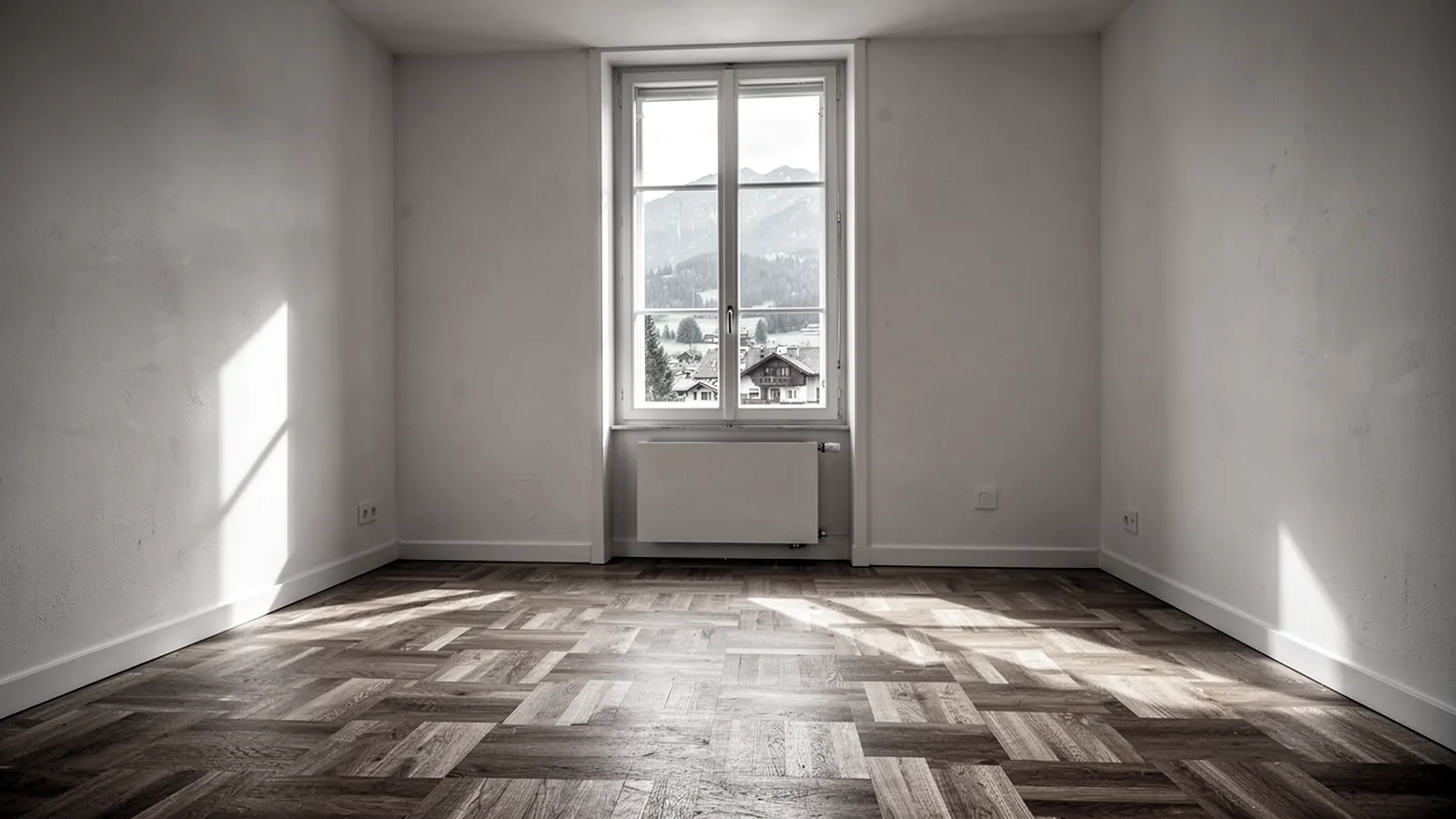
A move-in inspection report in Switzerland is a written record of the condition of a flat on the day your employee takes the keys. It is signed by both sides. At move-out, it is the document that the property manager compares against the flat's condition. For an employer, this single sheet of paper often decides whether a deposit comes back in full.
Many transferees arrive from countries where handover is informal. In Switzerland it is a formal step. Your employee should treat it as one.
What the handover inspection is
The handover inspection (Wohnungsübergabe in German, remise de l'appartement in French) happens twice. The first time is at move-in. The second is at move-out, when the tenant returns the flat. The written record is called the handover protocol (Übergabeprotokoll or Abnahmeprotokoll; état des lieux in French).
Both sides walk through the flat. They note the condition of each room and sign. The protocol is evidence. It does not create new rights, but it shapes any later discussion about damage.
The inspection is run by the landlord or, more often, by the property manager (régie, Verwaltung). If your employee rents through a managed building, expect a representative of the manager to attend. See property managers in Switzerland for how these firms work.
Why it matters to the employer
Your policy may cover deposit funding, a lump sum, or a managed service. In each case the employer has an interest in the outcome.
- A deposit (Mietzinsdepot) is tied up for the length of the tenancy. Disputes at the end delay its release.
- Defects not recorded at move-in are hard to separate from damage caused by the tenant.
- A weak record can turn a routine departure into a cost for the transferee, and sometimes for the company.
The deposit itself is covered in rent deposit in Switzerland. The terms of the lease are set out in the Swiss lease contract. Read both before the inspection date is fixed.
Before the inspection: what to prepare from abroad
Your employee can do useful work before landing. The aim is to arrive ready to inspect, not to learn the vocabulary on the day.
- Obtain the lease and any house rules. The inspection is measured against what the lease says about the flat's condition and equipment.
- Ask the property manager how the handover is organised. Who attends, where the protocol is written, and whether a template is used.
- Plan the date with the move. Do not book the inspection for a time when removals are still unloading. The employee needs to look, not to supervise a van. See importing household goods for how shipments and customs affect the calendar.
- Decide who attends for the employee. If the employee cannot attend, ask the property manager what authorisation is needed. Do not assume that someone else can sign.
- Pack a simple kit. A phone with a working camera, a torch, a notepad, and the lease.
If the employee lands in temporary housing first, the inspection of the final flat may take place later. Temporary options are covered in temporary and furnished housing for assignees.
Step by step: the move-in inspection
The following order works for most flats. It is a method, not a legal requirement.
Start with the protocol
Ask for the protocol before the walk-through begins. Read the printed items. Note which rooms and elements are already listed, and which are missing.
Walk each room in the same order
Use the same order every time: ceiling, walls, windows, floor, doors, fittings. Then repeat in the next room. A consistent order is easier to compare later.
Record defects, however small
Mark scratches, stains, chips, loose handles, worn seals, and marks on parquet. A small mark that is not written down becomes the tenant's problem at move-out. Be specific: location, type of defect, approximate size.
Test what can be tested
Open and close windows and shutters. Run taps and check drainage. Operate the oven, hob and extractor. Check the intercom, the lock and every key. Lift the lid of appliances that come with the flat.
Photograph everything
Take dated photographs of each defect and of each room as a whole. Keep the files in a labelled folder. Photos support the protocol; they do not replace it.
Do not sign under pressure
Read the final protocol. If a defect is missing, ask for it to be added before signing. If the manager prefers to send the protocol later, ask what the process is for adding comments afterwards, and put those comments in writing.
Keep your copy
Obtain a signed copy. Store a scan with the lease and the deposit confirmation.
Reporting defects found later
Some defects only appear after the first days: a leak, a faulty appliance, a smell. Report them in writing to the property manager, with photos, as soon as they are found. The lease or the manager's notes may state a period for reporting such defects. Check it, and do not leave it to the end of the tenancy.
Keep proof that the message was sent. Ask for a written acknowledgement.
During the tenancy
The protocol is not a document to file and forget. Advise your employee to keep it with the lease. Any repair, replacement or change made in the flat should be recorded in writing. If the manager organises repairs, keep the confirmation.
The employee must also complete the arrival formalities. Registration with the municipality (Gemeinde) is typically required within 14 days of arrival, though the exact rule can vary by municipality and canton (ch.ch). The lease and the protocol are often among the documents the municipality or insurer asks to see. See Sources for the official portal.
Moving out: the return inspection
The return inspection is the second half of the process. Prepare for it as carefully as for the first.
Read the lease on cleaning and repairs
The lease and the manager's notes describe what condition is expected at return. Normal ageing of a flat is treated differently from damage. Which side bears a given cost depends on the facts and on the lease, and a specialist can review a specific case.
Clean to a professional standard
Swiss managers expect a flat to be returned very clean. Windows, kitchen, bathroom, cellar and balcony are all checked. Many tenants hire a cleaning firm. Ask the manager whether a cleaning certificate or other proof is wanted.
Compare with the move-in protocol
Bring the original protocol and photos. At each point where the manager notes a defect, check whether it was already listed.
Handle disagreements in writing
If the manager records a defect that was there at move-in, say so on the spot and ask that your objection is written in the protocol. Do not sign a version that contradicts your records without a note of disagreement.
Return all keys
Count every key, including mailbox and cellar keys. Record the number returned.
Ask about the deposit
Ask in writing how and when the deposit will be released. The process depends on the bank arrangement and on the manager.
The checklist as a schema
The grid below sets move-in and move-out side by side.
Checklist for your employee
- Obtain the lease and house rules before arrival
- Ask the manager how the handover is organised
- Fix a date that does not clash with the delivery of household goods
- Confirm who attends if the employee cannot
- Take a phone, torch, notepad and lease
- Walk each room in the same order
- Record every defect in the protocol
- Photograph every room and every defect
- Test taps, windows, appliances, locks and keys
- Obtain a signed copy and store it with the lease
- Report later defects in writing
- Keep records of any repair during the tenancy
- At move-out, bring the original protocol and photos
- Return every key and note the number
Common mistakes
- Treating the visit as a formality. The protocol is the main evidence.
- Signing a blank or incomplete protocol. Always complete it first.
- Relying on a verbal promise. A promise to "fix it later" must be in writing.
- Forgetting photos. Photos back up the record; they carry weight when there is a dispute.
- Leaving the inspection to the removals team. The employee or a representative must attend.
For wider errors in the process, see common mistakes when moving to Switzerland. Related guides: renting in Switzerland and the Swiss rental application.
How support can help
The site does not carry out inspections or give advice on a specific tenancy. It puts employers in touch with relocation companies in Switzerland that offer settling-in and home-search support. The right company depends on the request. You can describe your case in the request at the bottom of the page. See also settling-in service and relocation services in Switzerland.
Frequently asked questions
What is a move-in inspection report in Switzerland?
It is the written record of a flat's condition at the start of a tenancy. Both sides sign it. It is later compared with the condition at move-out.
Is the inspection mandatory?
The practice is standard and managers organise it as a matter of course. Your employee should ask for it even if it is not offered. A specialist can explain what the lease requires in a specific case.
Who runs the inspection?
Usually the property manager or a representative of the landlord. In a small building it can be the landlord.
What is the German term for the protocol?
Übergabeprotokoll or Abnahmeprotokoll. In French it is état des lieux.
Can the employee attend the inspection later if they arrive after the keys are handed over?
Ask the manager in advance. Some managers allow a later visit, others expect a representative. Agree the arrangement in writing.
Can someone attend on the employee's behalf?
Often yes, but ask the manager what authorisation is needed. Do not assume a colleague can sign.
What should the employee bring?
The lease, a phone with a camera, a torch and a notepad. A copy of the house rules also helps.
What if the protocol is in German or French and the employee reads only English?
Ask for time to read it. Use a translation tool or a trusted colleague for the draft. Do not sign a text that is not understood.
Should every small mark be recorded?
Yes. Small marks are the most often disputed. Describe them briefly and precisely.
Do photos replace the protocol?
No. They support it. The signed protocol is the main document, and photos should match it.
What if the manager refuses to add a defect?
Ask that the refusal be noted, or write a dated message the same day listing the defect. Keep the photos.
Can the protocol be corrected after signing?
Possibly, but it is harder. Ask the manager how comments can be added after the visit and send them in writing.
What if a defect appears after move-in?
Report it in writing to the manager with photos. Check the lease for any stated period and keep proof of sending.
Does the protocol apply to furnished flats?
Yes. In a furnished flat, the protocol should list the furniture and appliances as well as the rooms.
Who pays for normal wear?
Normal ageing is treated differently from damage. Which costs fall on which party depends on the facts and the lease, so a specialist should review a specific case.
How clean must the flat be at move-out?
Managers expect a very clean flat, including windows, kitchen, bathroom and cellar. Ask the manager what proof is wanted.
Should the employee hire a cleaning firm?
Many tenants do. It is a practical choice, not a rule. Ask the manager whether a certificate or receipt is expected.
What happens if the manager and the employee disagree at move-out?
Record the disagreement in the protocol. Do not sign a version that contradicts your records without noting your objection.
How is the deposit released?
It depends on the arrangement with the bank and the manager. Ask in writing how and when it will be released.
Does the employer have a role in the inspection?
The employer sets the policy, funds the deposit in some packages, and often supports the transferee. The tenancy itself remains between the tenant and the landlord.
Can an HR team review the lease before the employee signs?
It can help the employee understand the main terms. For legal advice on a specific lease, a specialist should be consulted.
Does the municipality registration depend on the lease?
The municipality often asks for documents when registering. The timing varies by municipality and canton, and is typically set at 14 days from arrival (ch.ch).
What if the employee stays in temporary housing first?
The inspection of the final flat then takes place when the tenancy starts. Temporary housing may have its own check-in and check-out.
Can the employee refuse to sign?
The employee can ask for corrections before signing. If the manager will not amend the protocol, add a written note of disagreement.
How long should the employee keep the protocol?
Keep it at least until the deposit has been released and the tenancy is fully closed.
Is this guide legal advice?
No. It explains the general process. A specialist can examine your case through the request at the bottom of the page.