Your transferee will receive a work contract, a permit and a lease. Nobody sends a document on waste sorting or on how to behave in a shared building. Yet these are the points on which new arrivals most often meet friction in their first weeks.
This page explains how the Swiss house rules on recycling and neighbours work, who sets them, and what you can brief before departure. It is general information. It is not advice on any individual lease or case.
Why this matters for an employer
A relocation can be technically perfect and still start badly. A transferee who is reprimanded by a neighbour in week one is a distracted employee. A family that does not understand the waste system may feel judged by a community it has barely met.
Your duty of care as employer does not require you to police household habits. It does suggest a short, clear briefing. The cost is low and the effect on settling in is real.
Three points frame everything below:
- Rules are local. They are set by the commune (Gemeinde in German, commune in French, comune in Italian), by the canton and by the building.
- Rules are often unwritten. Neighbours expect them to be known.
- Tone matters more than detail. A polite greeting and a visible effort count for a lot.
Who sets which rule
Four layers apply at once. Your employee will meet all of them.
| Layer | What it covers | Where to find it |
|---|---|---|
| Commune | Waste collection, sorting, bag or tag requirements, collection points | Commune website or counter |
| Canton | Broad framework, enforcement powers | Cantonal portal |
| Building | House rules (Hausordnung), laundry room, shared garden, parking | Annex to the lease |
| Neighbours | Customs, expectations, tolerance | Conversation |
The practical lesson is simple. There is no national rulebook for daily life. A rule that applies in one commune may not apply twenty minutes away. Ask the commune, then read the house rules attached to the lease.
Recycling: what to expect
Switzerland sorts waste more thoroughly than most countries of departure. Transferees from the United Kingdom, the United States, India, China or the Emirates often find the system more demanding than at home. Those from Germany will recognise the logic. Those from France, Japan or Australia will find some parts familiar and others new.
The general logic
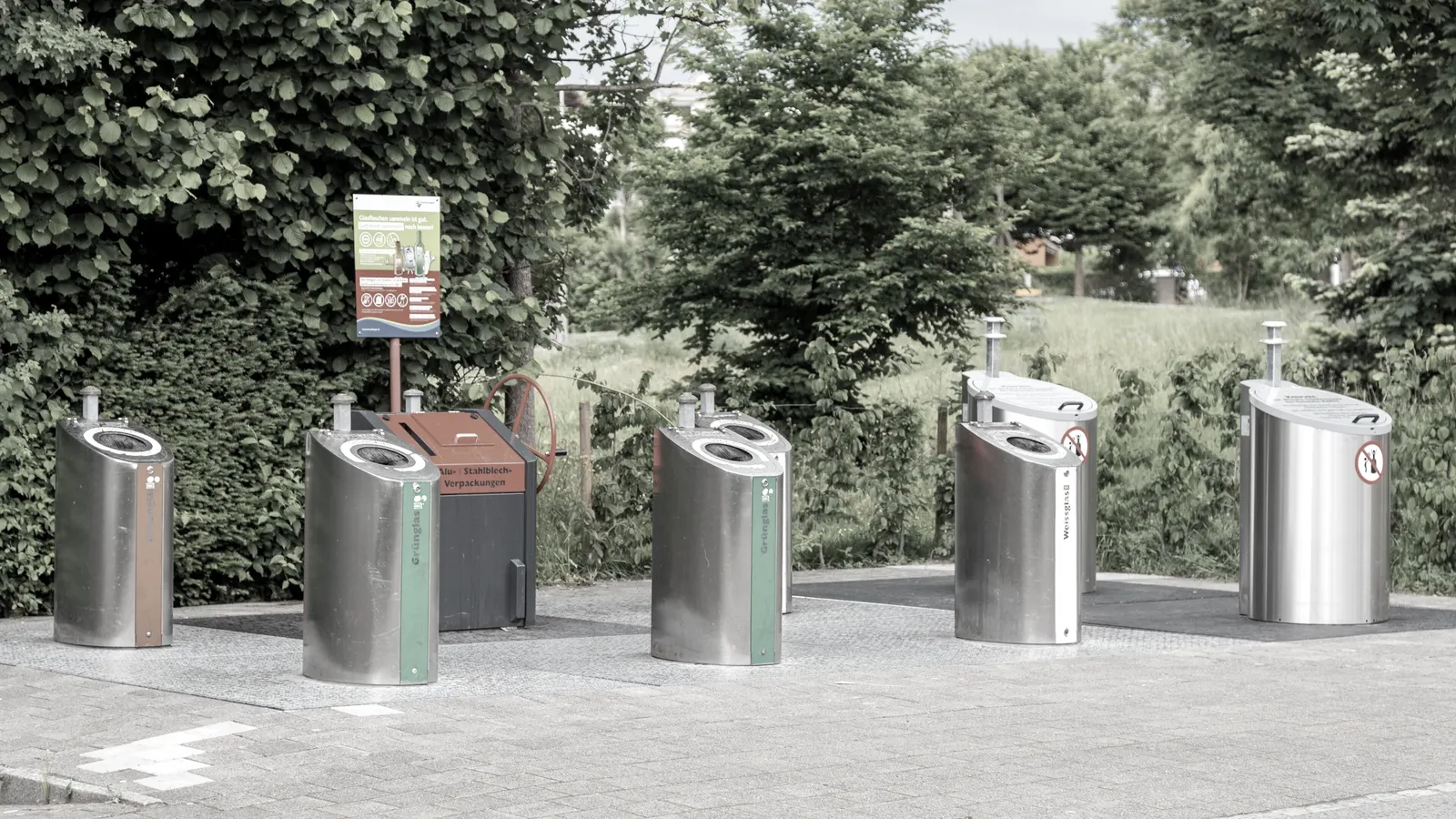
Households separate their waste into several streams. Typical streams are glass, paper and cardboard, metals, organic waste, textiles, batteries and electronics. Which streams are collected at the kerb and which go to a collection point depends on the commune.
Residual waste is the part that cannot be recycled. In many communes it must go into official bags or carry an official tag, which is how the commune funds collection. The exact system, and its cost, varies. Do not quote a price to your employee. Point to the commune.
Collection points and calendars
Most communes publish a collection calendar. It may be a paper leaflet, a website or an app. Your employee should obtain it at the commune counter during the arrival registration, or find it online.
Collection points have their own etiquette. Sorting glass by colour, flattening cardboard and keeping to permitted hours are common expectations. Leaving bags beside a full container is not tolerated.
Common mistakes
- Putting out residual waste in a normal bag when an official bag is required.
- Leaving waste outside on the wrong day.
- Dropping glass at a collection point at a time when noise is not allowed.
- Mixing plastics, paper and organic waste in one bag.
- Leaving bulky items on the pavement without arranging collection.
Most of these are corrected first by a neighbour, then by the managing agent, and only then by the commune. Fines exist in some places. Amounts depend on the commune, so do not state any.
Bulky waste and moving boxes
A move generates cardboard and packaging. Many removal teams take it away. If yours does not, brief your employee on how the commune handles bulky waste. For the customs side of the shipment itself, a specialist can advise through the request form at the bottom of the page.
Neighbour rules: the unwritten part
Greetings
In a Swiss building, greeting neighbours is normal. A short hello in the stairwell or lift is expected, in the local language where possible. Silence can be read as coldness. This costs nothing and often resolves later friction before it begins.
See languages and regions for how the local language changes by area.
Quiet periods
Most buildings and communes expect quiet at night and during certain parts of the day. Many also expect rest on Sundays and public holidays. Specific hours differ. They are written in the house rules, in the lease annex or in communal regulations. Your employee should read them on the day the keys are handed over.
Practical consequences:
- Vacuuming, drilling and loud music follow these limits.
- Flushing, showering and washing machines at night may draw comments in some buildings.
- Children's noise during the day is generally tolerated, but courtesy helps.
- Parties are best announced to neighbours in advance.
Shared spaces
Laundry rooms usually run on a booking system or a rota. Leaving it clean is part of the rule. Bicycle rooms, cellars, gardens and bin areas follow the same principle: leave them as you found them.
Balconies and terraces
Barbecues, smoking, drying laundry and plants are the usual subjects. The house rules may restrict some of them. Ask before assuming.
Parking
Parking spaces are normally allocated by the lease. Visitor spaces are limited. Using someone else's space, even briefly, can start a dispute. For vehicles, check the rules with the managing agent.
What the lease says
The house rules are usually attached to the lease and form part of it. A tenant is expected to follow them. Breaches can, in serious or repeated cases, have consequences under the tenancy. Read the Swiss lease contract for the general structure, and have a specialist review any clause that worries your employee.
We do not give individual legal advice on a lease. A specialist can look at a specific case once you submit a relocation support request.
When to brief, and what to include
Brief once the housing is agreed and again shortly after arrival. Your employee will not retain detail before leaving.
Under Swiss practice, the arrival registration with the commune must be made within 14 days of arrival, and the exact deadline can vary by commune or canton (Swiss federal authorities' portal, ch.ch). This is the natural moment to collect the waste calendar. Ask for it at the counter. Our page on municipality registration explains how the settling-in step is organised.
A short briefing might cover:
- The waste calendar and the official bags or tags
- Where the collection points are
- The house rules and the quiet periods
- The laundry room schedule
- How to introduce oneself to neighbours
- Who to contact in the building if something goes wrong
For a broader view of arrival tasks, see living in Switzerland as an expatriate, the personalised checklist and Swiss workplace culture and integration. For other recurring household obligations, see post, mobile and electricity.
Checklist for your transferee
- Ask the commune for the waste calendar and the list of collection points
- Find out whether official bags or tags are required for residual waste
- Read the house rules attached to the lease
- Note the quiet periods and the laundry room schedule
- Greet neighbours and introduce your household
- Learn which streams are sorted and where each one goes
- Keep the managing agent's contact details to hand
- Ask the commune about bulky waste before the move is finished
Frequently asked questions
Do Swiss recycling rules apply to every household?
Yes. Every resident household is expected to sort waste according to the commune's rules. Tenants and owners are treated alike. The details come from the commune.
Who explains the recycling rules to a new arrival?
The commune is the authority. In practice, the arrival registration is the best moment to ask for the waste calendar. The managing agent or a neighbour often adds practical advice.
Are the rules the same across Switzerland?
No. The principles are similar. The streams collected, the days, the bag system and the collection points differ from one commune to another. Your employee should check the local rules.
Do we need to pay for waste collection?
In many communes, residents pay through official bags, tags or a fee. The system differs by commune. Ask the commune. We do not quote amounts.
What happens if an employee uses a normal bag for residual waste?
Where official bags are required, a normal bag may be left uncollected, and a neighbour or the commune may raise the matter. In some places a fine can follow. Check the local rule.
Can an employee put waste out whenever convenient?
Usually not. Collection days and permitted hours for collection points are set locally. Putting waste out early or late is a common source of complaints.
Where do glass, paper and metal go?
They normally go to separate containers at a collection point, though some communes collect some streams at the kerb. The commune's calendar says which.
Are electronics and batteries collected separately?
Typically yes. Shops and collection points commonly take them back. Your employee should ask the commune or the seller rather than put them in household waste.
What about bulky items after a move?
Large items usually need separate arrangements. The commune explains how bulky waste is collected. Do not leave items on the pavement without checking.
Who sets the quiet hours in a building?
The house rules and the commune's regulations do. The lease normally refers to the house rules. Your employee should read both when taking over the flat.
Is Sunday really treated differently?
In many places, yes. Noisy activity is discouraged on Sundays and public holidays. The extent depends on the commune and the building.
Can a neighbour complain about children's noise?
Normal daytime noise from children is generally accepted, but courtesy still matters. For anything specific, a specialist can review the situation.
What if an employee breaks a house rule by mistake?
A first mistake is usually handled with a conversation or a note. Repeated or serious breaches can have consequences under the tenancy. Apologise, correct and move on.
How should an employee greet neighbours?
A short greeting in the local language is enough. Introducing the household in the first weeks is appreciated. It sets a good tone for later.
Do we need to tell neighbours about a party?
It is good practice, especially in a building with shared walls. Choose a reasonable end time and keep to the quiet periods in the house rules.
How does the laundry room work?
Most buildings use a booking board, a digital system or a rota. Respect your slot, clean up and do not leave laundry behind. The house rules say how it works in your building.
Can an employee use the balcony for a barbecue?
It depends on the house rules and the building. Some restrict it. Ask the managing agent before assuming.
Who do we contact in a dispute with a neighbour?
Start with a calm conversation. If it does not resolve, contact the managing agent. Your employee should keep a record of what was said. A specialist can look at a specific case.
Should HR brief the employee on this before departure?
A short briefing is useful. It avoids early friction and shows care. Keep it practical and general. Detail is best given at arrival, with the commune's own documents.
Is this part of the relocation package?
That depends on your policy and the chosen service. The topic usually belongs to settling-in support. See relocation services in Switzerland for the scope of services.
Can the site decide how the rules apply to our employee?
No. We connect you with relocation companies. They can explain local practice. The commune, the lease and the managing agent decide how the rules apply to a given household.