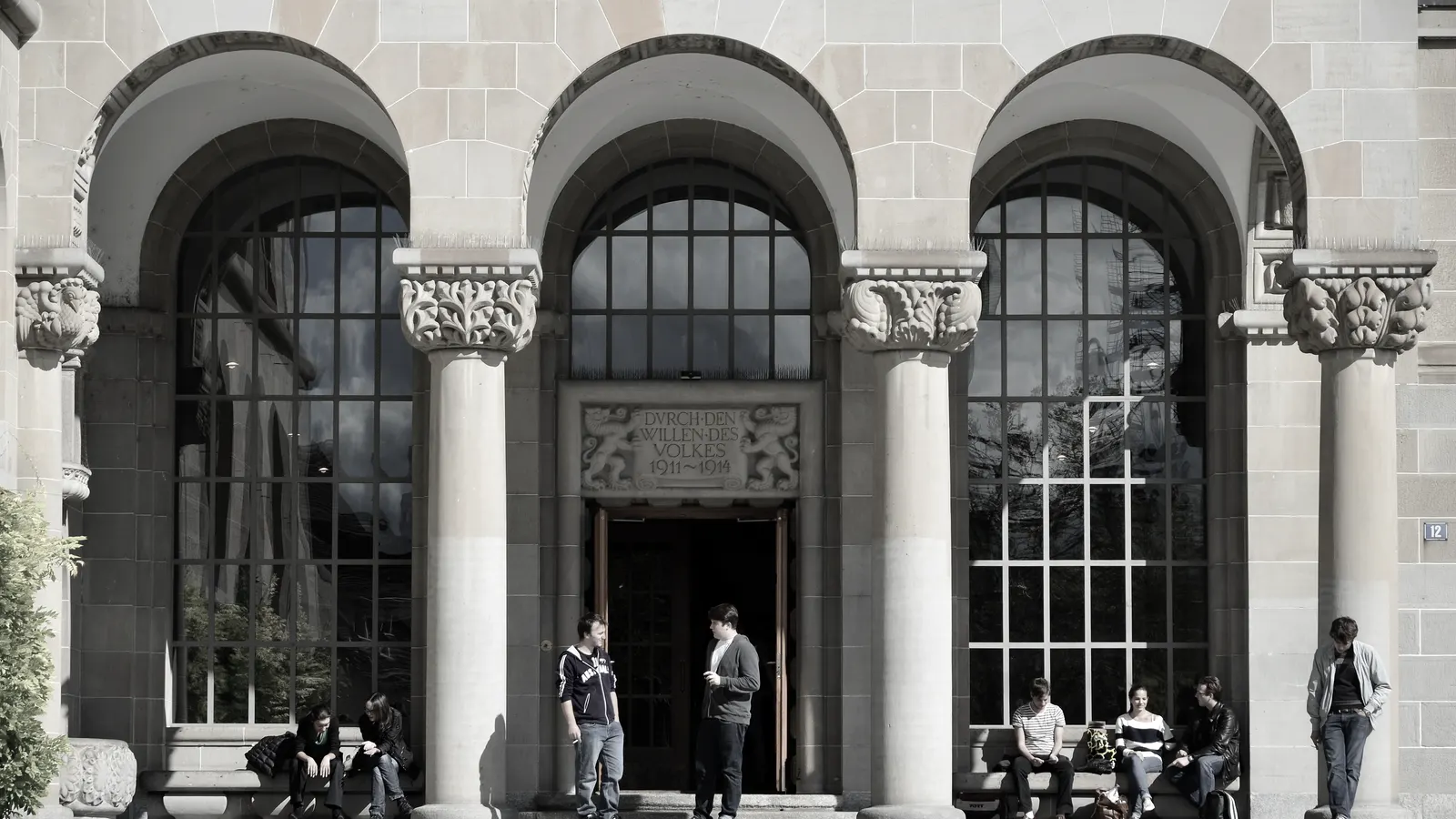
When your employee relocates with teenage or young adult children, higher education becomes a policy question. Will the child study in Switzerland, stay abroad, or move between the two? This page explains how to look at universities in Switzerland for expats: the types of institution, the practical steps and the points your policy should settle early.
It is written for the HR or mobility manager. It does not recommend a named institution, and it does not give personal advice on immigration, tax or insurance. For those, a specialist reviews the individual file through the request at the bottom of the page.
How Swiss higher education is organised
Swiss higher education is split into several families of institution. Each has its own mission, admission logic and teaching style. Your transferee's child will meet this vocabulary quickly, so it helps to know it first.
- Cantonal universities. Run by the cantons. Broad academic programmes, strong research orientation.
- Federal institutes of technology. Run by the Confederation. Engineering, natural sciences and mathematics.
- Universities of applied sciences (Fachhochschule, HES). Practice-oriented degrees, often linked to a prior vocational path.
- Universities of teacher education. Training for school teachers.
- Private and specialised institutions. Business, hospitality, design and international studies, with their own admission rules and fee structures.
The language of teaching differs by region. In the German-speaking part, German dominates, with more English at advanced level. In the French-speaking part, French dominates. In the Italian-speaking part, Italian does. Programmes taught in English exist, but the choice varies by institution and level. Check each programme directly rather than assuming.
Which type suits which student
There is no single best choice. The fit depends on the student's previous schooling, language skills and career direction.
| Student profile | Often considered |
|---|---|
| Strong academic profile, research interest | Cantonal university or federal institute |
| Applied, career-focused profile | University of applied sciences |
| Wants to teach | University of teacher education |
| Business, hospitality or design focus | Private or specialised institution |
| Criterion | Cantonal university | Applied sciences | Private institution |
|---|---|---|---|
| Orientation | Academic | Practical | Specialised |
| Teaching language | Regional, some English | Regional, some English | Often English |
| Admission | Recognised school-leaving qualification | Qualification plus relevant background | Set by the institution |
Treat the table as a map, not a rule. Each institution publishes its own conditions, and they change.
Recognition of the school-leaving diploma
The first question for admission is whether the child's foreign diploma gives access to the chosen institution. A British A-level file, a US high school diploma, an Indian board certificate, a German Abitur, a French baccalauréat, a Canadian provincial diploma, a Chinese or Japanese school certificate and an Australian senior certificate are all assessed differently.
Some diplomas are accepted directly. Others need extra subjects, a preparatory year, an entrance examination or a language certificate. The institution decides, not your employer and not the relocation provider.
Ask the admissions office three things:
- Does the diploma give direct access to the programme?
- Which supplementary documents are required, and in which format?
- Which language certificate is accepted, and at what level?
Start this exchange early. Certified translations and apostilles take time to arrange from abroad.
Residence status of the student
Immigration status is the point HR most often overlooks. Switzerland has two admission regimes: nationals of the EU or EFTA, and nationals of third states (outside the EU/EFTA). The SEM describes both regimes on its official pages (State Secretariat for Migration, SEM).
A child who arrives as a family member of an assignee follows the family's permit logic. A child who arrives alone to study applies under a different logic. The distinction matters, because the route, the documents and the conditions differ. See family reunification in Switzerland for the family route.
What your policy should clarify:
- Whether the child is covered as a dependant under the assignment, and until which age.
- What happens if the child turns adult during the posting.
- Whether the child continues studies if the assignee leaves Switzerland.
Do not assume that the parent's permit extends automatically to a student. Confirm the individual position with the migration authority or a specialist.
From abroad to enrolment: the sequence
Application windows and deadlines differ by institution. Do not rely on a general date. Each admissions page states its own calendar.
Arrival formalities that also apply to students
A student who takes up residence in Switzerland follows the same arrival steps as any resident. Notification to the municipality is due within 14 days of arrival, though this can vary by municipality or canton. On site, expect to present an identity document, the residence or work permit and proof of health insurance (ch.ch).
Health insurance is compulsory. Anyone who takes up residence in Switzerland must take out basic health insurance no later than three months after taking up residence. If the deadline is met, cover is retroactive to the date of residence and premiums are due retroactively. If it is missed, cover starts at affiliation, a surcharge may apply for an unexcused delay, and the cantonal authority may assign an insurer (Federal Office of Public Health, FOPH).
For your policy, this means one thing: decide who arranges and pays for the student's insurance, and brief the family before departure. An institution may ask for proof of cover at enrolment.
Housing near the campus
Student housing is limited in many cities, and demand is high at the start of each academic year. Options generally include student residences, shared flats and private rentals. Foreign students often search for a room from abroad, which is difficult without local knowledge.
If your assignee already rents a family home, check whether the child will live there and commute. If not, the student's housing should be a separate line in your policy discussion. See renting in Switzerland support and the home search service for how a specialist can help.
Costs and funding: what to ask, not assume
Public institutions generally charge lower tuition than private ones, but fees vary and can differ for foreign students. This page gives no figure because none has been verified for this guide. Ask each institution for its current fee schedule and for any difference between resident and non-resident students.
Living costs are a separate question. Rent, food, transport and insurance all add up. Your policy should state whether it supports the student's costs, supports only up to a stated age, or leaves them to the family. Make the rule explicit before the assignment letter is signed.
Studying in English or learning the local language
Some students will follow a programme in English. Others will need the local language. If the child will study in the regional language, language preparation should begin before arrival. See language courses for assignees for how language learning fits into a relocation.
A child who has attended an international school may find the transition to a local-language university harder than expected. Check the options with the school before the decision, as covered in international and bilingual schools in Switzerland.
Policy decisions for HR
The following points belong in your relocation policy, not in an email to the employee later.
- Age limit for dependant coverage, and what it includes.
- Tuition support: none, partial or full, in Switzerland or abroad.
- Housing support for a student living away from the family home.
- Insurance responsibility for an adult child.
- Timing: what happens if the assignment ends mid-degree.
- Return path: support if the child continues studies in the home country.
For a framework on balancing allowances and services, see designing a relocation policy for Swiss assignments and lump sum or managed relocation.
Checklist for the family
- Confirm whether the school diploma gives access to the chosen programme
- Check the programme language and the language certificate required
- Note the application window of each institution
- Order certified translations and apostilles where requested
- Clarify the student's residence position with a specialist
- Agree who arranges and pays for health insurance
- Plan housing before the start of the academic year
- Notify the municipality on arrival
- Keep copies of all documents in both languages
How a relocation specialist can help
A relocation provider does not admit students and does not grant permits. The authorities and the institutions decide. What a specialist can do is review the family's situation, explain the route that applies and coordinate the practical steps around it. Use the request at the bottom of the page to ask for a specialist to review the file. You can also read about immigration support and the settling-in service.
For younger children, start with schools in Switzerland for expatriate families and the Swiss school system, which explain how the path leads to higher education.
Frequently asked questions
Can expat children study at Swiss universities?
Yes, in principle. Access depends on the school diploma, language skills and the institution's own conditions. Residence status must also be settled with the authorities.
Are there English-taught programmes?
Yes, some exist, mostly at advanced level and in specific fields. The offer varies by institution. Check each programme page.
Do all students need to speak a Swiss language?
Not always, but many programmes are taught in the regional language. Language requirements are set by the institution.
Is my employee's child automatically admitted?
No. Admission is decided by the institution. Being the child of an assignee gives no automatic place.
Is a foreign diploma recognised?
It depends on the diploma and the institution. Ask the admissions office whether it gives direct access or needs supplements.
What if the diploma needs supplementary subjects?
The institution will state what is required, for example a preparatory year or an entrance examination. Plan for this before the move.
Does the parent's permit cover the student?
Not automatically. The student's position depends on the permit route and the individual file. A specialist should review it.
Are EU and non-EU students treated differently?
Yes. Switzerland has two admission regimes: EU/EFTA nationals and third-state nationals (SEM). The difference affects the route and the documents.
Can a student apply from abroad?
Yes. Most institutions accept applications from abroad, with documents and translations as requested.
When should the family start?
As early as possible. Diploma recognition, translations and housing all take time. Deadlines differ by institution.
Does the student need to register with the municipality?
A student who takes up residence follows the usual arrival steps. Notification is due within 14 days, though this can vary by municipality or canton (ch.ch).
Is health insurance compulsory for students?
Yes, for anyone resident in Switzerland. Basic insurance must be taken out no later than three months after taking up residence (FOPH).
What if the insurance is arranged late?
Cover starts at affiliation, a surcharge may apply for an unexcused delay, and the canton may assign an insurer (FOPH).
Who should pay for the student's insurance?
That is a policy decision. State it in writing before the assignment starts.
Are public universities cheaper than private ones?
Generally public institutions charge lower tuition, but fees vary. Ask each institution for its current schedule.
Is student housing easy to find?
Often not. Demand is high at the start of the academic year. Start the search early.
Can the student live in the family home?
Often yes, if the campus is within reach. If not, plan separate housing.
What happens if the assignment ends mid-degree?
The student may need to continue, transfer or return. Decide the policy rule in advance.
Should HR cover tuition for adult children?
That is a policy choice. Some policies cover it, some contribute, some do not. Make the rule explicit.
Do international school graduates have an advantage?
They may find the transition easier, depending on the diploma and language. Admission still follows the institution's rules.
How can a specialist help?
A specialist reviews the family's situation, explains the applicable route and coordinates the practical steps. Authorities and institutions take the decisions.
Is there a tool to choose a school or path?
For earlier school years, see the school choice guide. For the overall move, the personalised checklist generator may help.
Sources
Related pages
- Schools in Switzerland for expatriate families
- The Swiss school system
- Public schools in Switzerland
- International and bilingual schools in Switzerla
- What an international school costs
- Enrolling a child in school after arrival
- Childcare and after-school care in Switzerland
- Supporting the accompanying partner