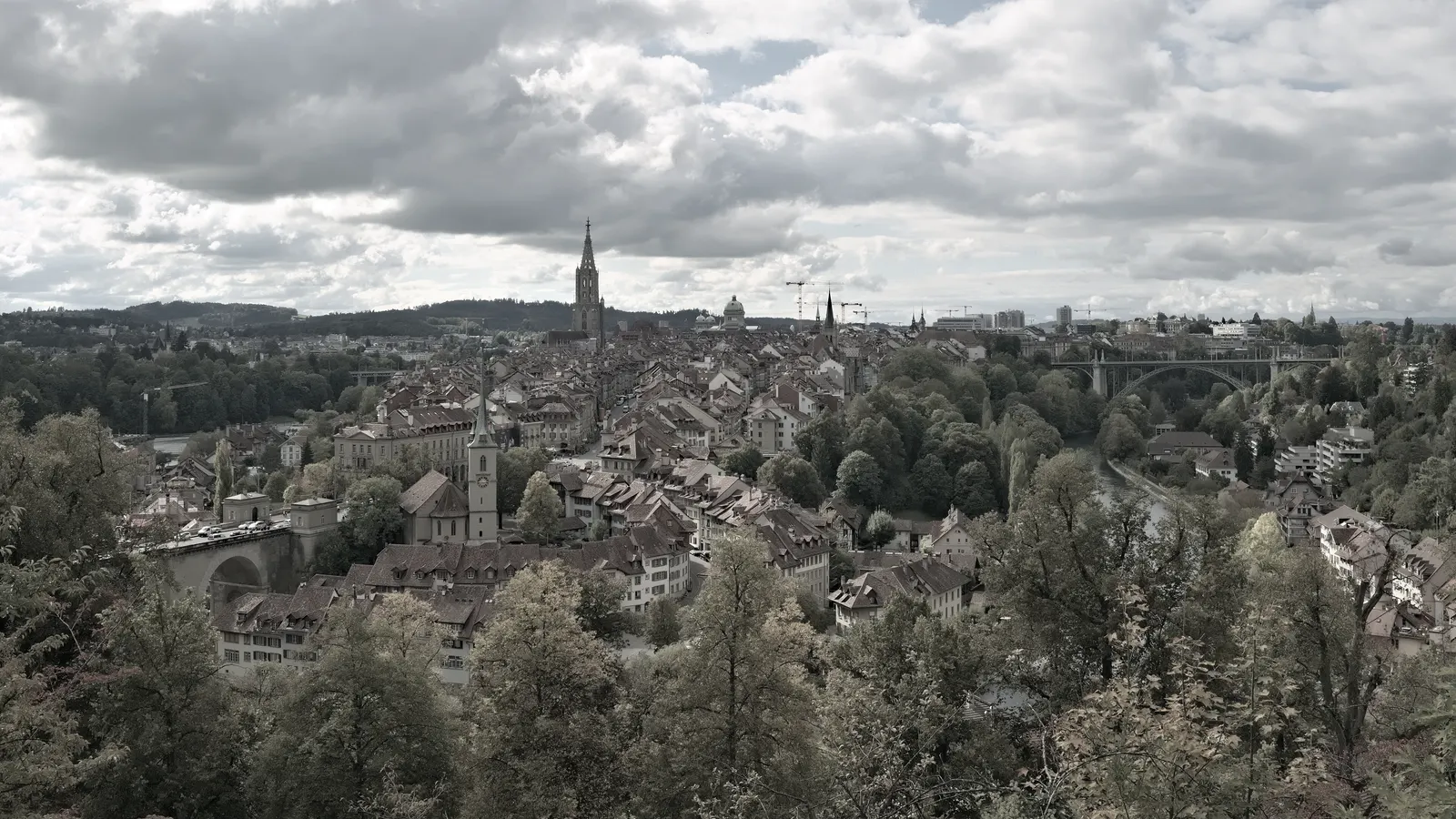
Living in Bern suits transferees who value a manageable city over a large one. Bern is the seat of the Swiss federal government, and it sits in the canton of the same name. For your employee, the practical questions are the same as anywhere in Switzerland: which language to prepare for, how to find a home from abroad, which school to choose and which authority handles the permit.
This page covers what is known and verified. Where a point cannot yet be confirmed, it says so and tells you who to ask.
Where Bern sits and who lives there
Bern is a city and a canton (Kanton), and the two are not the same thing. The city is a municipality (Gemeinde). The canton is the administrative level that runs migration, taxation and most schooling rules.
According to the Federal Statistical Office (FSO), Bern had a permanent resident population of 138,562 in 2025. Of these, 35,896 were foreign nationals, or 25.9% (FSO, STATPOP 2025). Your transferee will not be the only newcomer in the street. A quarter of residents come from abroad.
Language: plan for German first
The canton of Bern is officially bilingual, French and German, according to the Swiss Confederation (Presence Switzerland). The city of Bern itself is German-speaking. Note that the dominant language of the city is not measured in an FSO statistic, so treat this as general knowledge rather than a figure.
For HR, this has three consequences:
- Official letters, tenancy documents and school communication in the city will usually arrive in German.
- Everyday spoken language is Swiss German dialect, which differs from the standard German taught abroad.
- A language budget in the policy is worth considering for the transferee and for any accompanying partner. Our relocation support request can route this to a specialist.
Transferees arriving from Germany will read the paperwork easily. Those from the UK, the US, India, Canada, China, Japan, the Emirates or Australia generally will not, and from France the dialect often surprises.
Housing: what the data says
The housing market in the Bern area is tighter than many employers expect. The FSO reports a vacancy rate of 1.04% for the canton of Bern on 1 June 2026 (FSO, vacant dwellings by canton). The vacancy rate for the city itself has not been verified, so do not infer it from the cantonal figure.
Average net rents (excluding service charges) give an order of magnitude for budgeting. For the city of Bern, the FSO average over 2022-2024 is CHF 1,413 per month across all sizes (FSO, structural survey). By size, the same source gives:
| Dwelling size | Average net rent, city of Bern |
|---|---|
| 1 room | CHF 880 |
| 2 rooms | CHF 1,178 |
| 3 rooms | CHF 1,421 |
| 4 rooms | CHF 1,750 |
| 5 rooms | CHF 2,115 |
These are FSO averages for 2022-2024, not current asking rents. The figure for six rooms and more, CHF 2,754 (FSO), is statistically imprecise and should be treated with caution. For the canton as a whole, the FSO average net rent in 2024 was CHF 1,319 per month (FSO, 2024).
Swiss rooms are counted without kitchen and bathroom, so a "3-room" flat is what many foreign employees would call a two-bedroom flat. State this clearly in your housing allowance table.
A transferee who is abroad cannot view flats easily, and landlords often expect a full application file. A home search service can prepare this in advance. For the day of arrival, a settling-in service covers registration and practical set-up.
Permits: the cantonal migration office
Permit applications for Bern are handled by the cantonal migration authority, the Amt für Migration und Personenstand (MIP). Its official page is Amt für Migration und Personenstand, Kanton Bern. The State Secretariat for Migration (SEM) keeps the official list of cantonal authorities.
What the process looks like depends on the employee's nationality and contract. EU/EFTA nationals and third-country nationals follow different routes, and the authorities decide each case. No service can promise an outcome. See immigration support for how a specialist reviews a case, and use the permit finder when it opens at Which Swiss permit do I need?.
Schooling: verify before you promise
Families often ask first about international schools. For Bern, no official or nominative list of international schools has been verified for this page. Do not quote school names, fees or places to your transferee until they have been confirmed with the canton or with the school directly.
What you can do now:
- Ask the transferee for the children's ages and current curriculum (national, IB, British, American).
- Ask whether the family would accept the local public school, where teaching is in German.
- Request a specialist review through the school choice guide and the request form at the bottom of the page.
Public school placement follows the family's municipality of residence, so the home search and the school search affect each other. Settle the likely district first.
Getting around and arriving
Information on airport links, journey times and travel passes for Bern has not been verified for this page. Check timetables and passes with the Swiss federal railways and the local operator before you draw up a policy. Many transferees land at Zurich or Geneva and continue by train, so compare the city pages for Zürich and Geneva if the route matters.
A simple order of tasks for the first weeks:
- Before departure: permit route confirmed, home search started, language and schooling questions listed.
- On arrival: registration with the municipality (Gemeinde), then health insurance and a bank account.
- After that: school enrolment, utilities and a handover inspection of the flat.
Use the relocation calendar to set these dates for your policy.
Frequently asked questions
Is Bern a good city for relocated employees?
Bern suits employees who prefer a smaller city with a federal-government setting. Whether it is right for a given person depends on their language, family situation and workplace. A specialist can review the case after your request.
What language is spoken in Bern?
The city of Bern is German-speaking, while the canton is officially bilingual in French and German, according to the Swiss Confederation. Spoken everyday language is a Swiss German dialect.
How many people live in Bern?
The permanent resident population was 138,562 in 2025 (FSO). Of these, 35,896 were foreign nationals, or 25.9% (FSO).
What is the average rent in Bern?
The FSO average net rent in the city of Bern over 2022-2024 was CHF 1,413 per month across all sizes (FSO). It is a statistical average, not a current asking price.
How much does a 3-room flat cost in Bern?
The FSO average net rent for a 3-room flat in the city of Bern over 2022-2024 was CHF 1,421 per month (FSO). Net rent excludes service charges.
Is it hard to find a flat in Bern?
The cantonal vacancy rate was 1.04% on 1 June 2026 (FSO). The rate for the city itself has not been verified. Expect a competitive market and prepare a full application file before viewings.
Which authority issues permits in Bern?
The cantonal Amt für Migration und Personenstand (MIP) handles permit applications for the canton. The State Secretariat for Migration (SEM) lists all cantonal authorities.
Does my employee need to speak German?
It is not a legal requirement for every permit, but daily life, paperwork and local schools function mainly in German. Language support is a sensible line in the policy.
Are there international schools in Bern?
No verified list is available for this page. Confirm options with the canton or directly with schools before you make any commitment to a family.
How do I get from the airport to Bern?
Airport links and journey times have not been verified for this page. Check the Swiss federal railways timetable before you book the transferee's arrival.
Should my employee live in the city or a neighbouring municipality?
It depends on the workplace, schooling and budget. Commuting and school placement both follow the municipality of residence, so decide the district early. A specialist can compare options once you send the request at the bottom of the page.
Sources
- Swiss Confederation (Presence Switzerland), Multilingualism
- Federal Statistical Office (FSO), permanent resident population (STATPOP)
- Federal Statistical Office (FSO), average net rents in the ten largest cities
- Federal Statistical Office (FSO), average net rents by canton
- Federal Statistical Office (FSO), vacant dwellings by canton
- State Secretariat for Migration (SEM), cantonal migration authorities